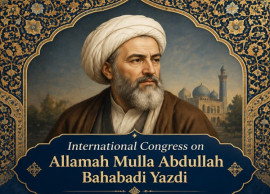
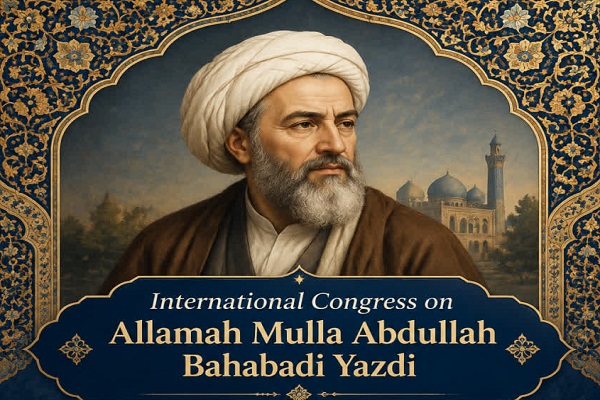
The International Congress on “Allamah Mulla Abdullah Bahabadi Yazdi” is organized by the Secretariat of the International Congress of Allamah Bahabadi and Baqir al-Olum University, in cooperation with national academic and research institutions.
The congress aims to re-examine the scientific, intellectual, and cultural status of Allamah Mulla Abdullah Bahabadi Yazdi in Islamic civilization, with a special emphasis on historical, institutional, and civilizational studies of the Safavid era.
The organizers have issued a call for papers and contributions.
Main Theme of the Congress:
The History and Era of Allamah Mulla Abdullah Bahabadi Yazdi
A) Biography of Allamah Mulla Abdullah Bahabadi
Personal and Family Life:
Lineage, birthplace, family background, and educational environment.
Scholarly Life:
The position of Allamah Mulla Abdullah Bahabadi in the continuity and transformation of the pedagogical tradition of logic and theology (kalam) in the 10th century AH.
The role of Allamah Mulla Abdullah Bahabadi in the interaction between the scientific centers of Iran and Iraq during the Safavid era.
The role of Allamah Mulla Abdullah Bahabadi in the shared Islamic rhetorical tradition.
Political Life:
The role of Allamah Mulla Abdullah Bahabadi in bridging the scholarly establishment and the Safavid state.
Intellectual and jurisprudential approaches of Allamah Mulla Abdullah Bahabadi toward political developments of the Safavid era and Safavid–Ottoman conflicts.
Social and Cultural Life:
The role of Allamah Mulla Abdullah Bahabadi in the religious and social organization of the Safavid era.
The interaction of Allamah Mulla Abdullah Bahabadi with the multicultural and multi-religious environment of Iran and Iraq in the 10th century AH.
B) The Era of Allamah Mulla Abdullah Bahabadi
Political Developments and Conditions:
Power structure and religious statecraft in Safavid Iran.
Safavid–Ottoman conflicts and their structural impacts on the Shia world.
Social Developments and Conditions:
Transformation of social and religious structures during the Safavid era and its influence on Shia societies in Iran and Iraq.
Inter-religious relations and the place of religion in the social organization of 10th-century AH Iran and Iraq.
Status of Seminaries and Scholarly Centers:
Institutional structure and geography of Shia seminaries in the 10th century AH.
Educational, financial, and cultural systems of seminaries and their impact on socio-political transformations.
Status of Sciences in Allamah’s Era:
Intellectual and scientific mapping of 10th-century AH Iran and Iraq.
Evolution and influence of pedagogical texts and intellectual movements.
Emergence and historical evolution of logic in the Islamic world up to the era of Allamah Mulla Abdullah Bahabadi.
Status of rational sciences, with an emphasis on logic, during Allamah’s era.
Position of rhetorical sciences in Allamah’s era.
Key Dates:
Paper Submission Deadline: Late June 2027
Notification of Acceptance: Late July 2027
Congress Date: September 2027
Congress Structure (Panels and Symposia):
The congress will feature a series of specialized symposia held across three main hubs:
Qom Session: Academic and seminary hub.
Yazd Session: Birthplace and historical context.
International Session: Held in a major city in Iraq.
Contact Information:
Researchers and interested scholars are invited to submit their contributions or contact the secretariat via:
Websites: bou.ac.ir | molaabdellah.ir
Email:
Eitaa: @BOU_International_Affairs
WhatsApp: +98 990 814 9747
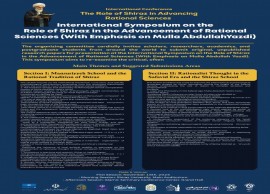
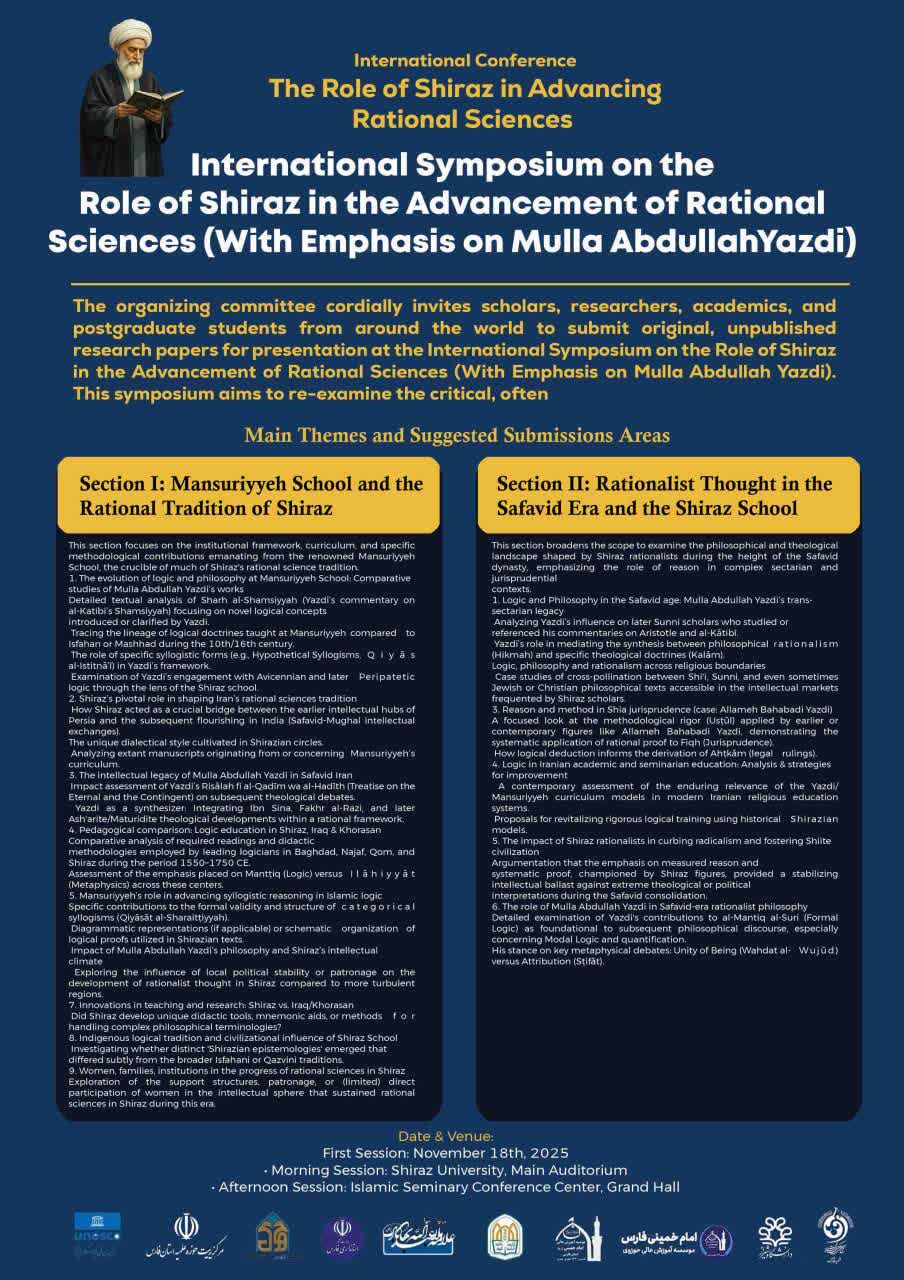
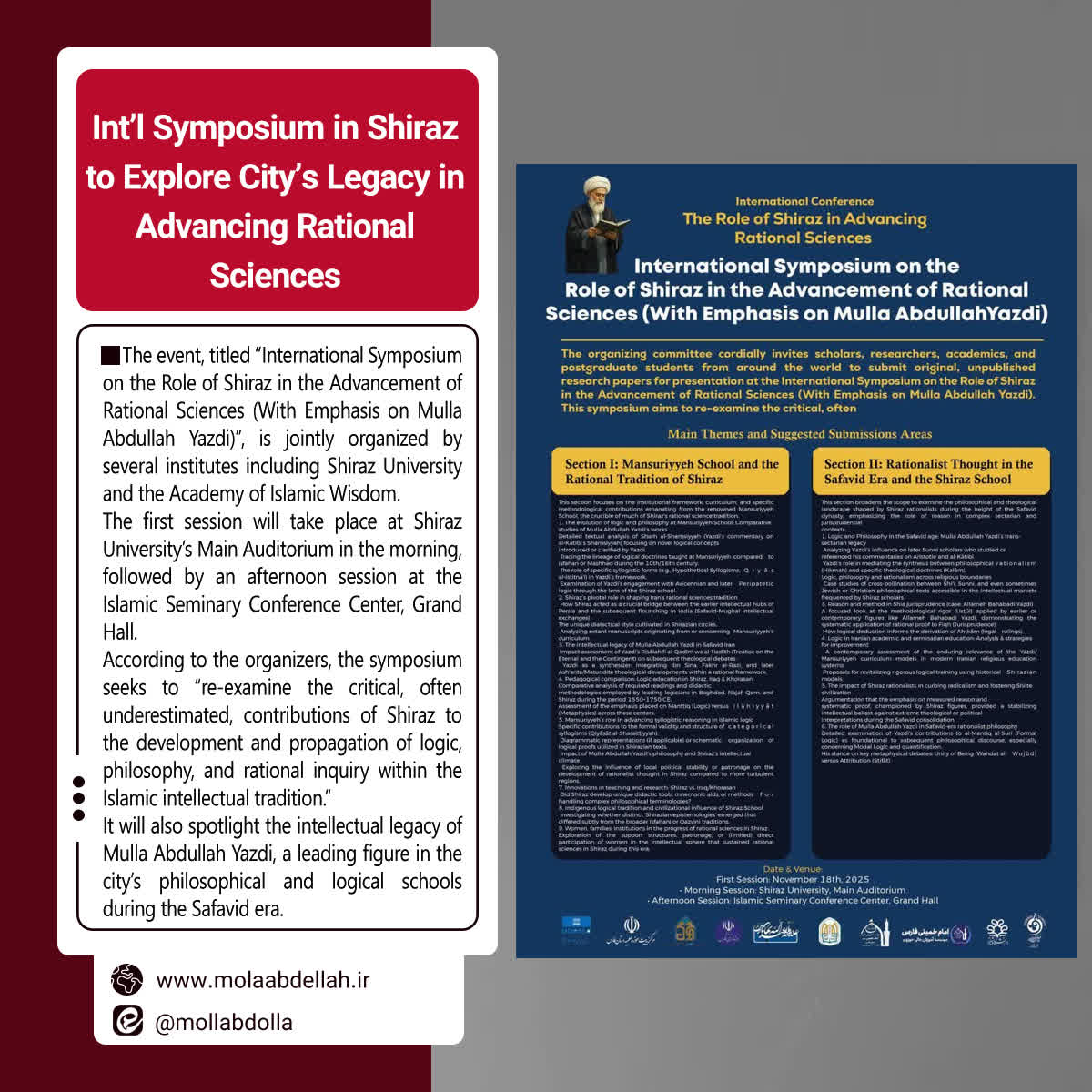
The event, titled “International Symposium on the Role of Shiraz in the Advancement of Rational Sciences (With Emphasis on Mulla Abdullah Yazdi)”, is jointly organized by several institutes including Shiraz University and the Academy of Islamic Wisdom.
The first session will take place at Shiraz University’s Main Auditorium in the morning, followed by an afternoon session at the Islamic Seminary Conference Center, Grand Hall.
According to the organizers, the symposium seeks to “re-examine the critical, often underestimated, contributions of Shiraz to the development and propagation of logic, philosophy, and rational inquiry within the Islamic intellectual tradition.”
It will also spotlight the intellectual legacy of Mulla Abdullah Yazdi, a leading figure in the city’s philosophical and logical schools during the Safavid era.
The conference will feature discussions on topics such as the Mansuriyyeh School’s influence on rational thought, comparative logic studies between Shiraz and other centers of learning, and the role of Shirazian scholars in shaping intellectual and theological discourse across the Islamic world.
Scholars, researchers, and postgraduate students are invited to submit original papers aligned with the event’s main themes. Submissions may cover the evolution of logic, comparative pedagogy, philosophical crosscurrents between regions, and Yazdi’s impact on rationalist traditions.
The symposium aims to encourage dialogue on how Shiraz’s rationalist heritage continues to influence contemporary scholarship and philosophical education.

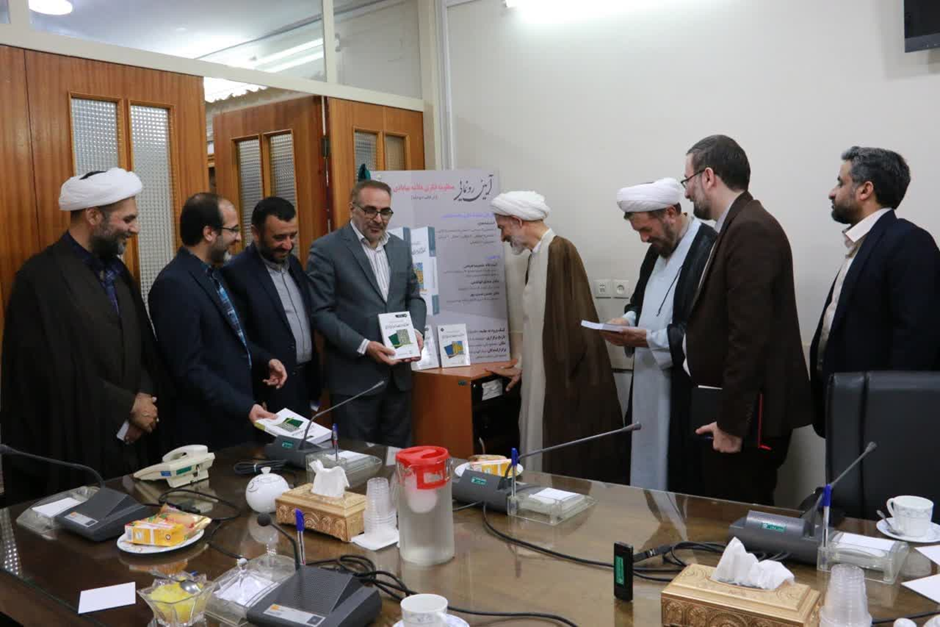
Picture: The Chairman of the International Congress of Allameh Bahabadi, Dr. Hasan Abdipour, presents their recent publications to the Head of the Supreme Assembly of Islamic Philosophy, Ayatollah Fayazi.
The Contribution of the Supreme Assembly of Islamic Philosophy to the International Congress of Allameh Mulla Abdollah Bahabadi Yazdi

Initially, during the meeting on the occasion of the Unity Week, they quoted statements from Ayatollah Seyyed Mohammad Javad Alavi Boroujerdi that Ayatollah Boroujerdi (may God sanctify his soul) had told Allameh Amini that he is a scholar of Rijal (Islamic biography) and Hadith, and considers the issued narrations as authentic. However, he expressed a desire to undertake a task that Seyyed Mortaza Alim Al-Huda wanted to accomplish, which is the official recognition of the Shia denomination. He emphasized that this work is so important to him that he is willing to sacrifice decades’ worth of people like Amini for its establishment.